

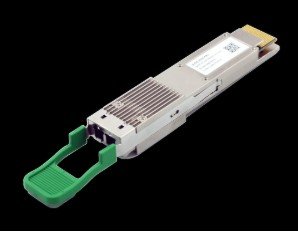
The relentless growth of generative AI, cloud computing, and large-scale model training has created an unprecedented demand for higher bandwidth and lower latency in data center interconnects. As network infrastructure evolves to meet these demands, 400G Ethernet has moved from early adoption to large-scale deployment, and at the heart of this transition lies the QSFP-DD (Quad Small Form-Factor Pluggable Double Density) optical transceiver form factor. This article provides a comprehensive overview of 400G QSFP-DD optical transceivers, exploring their technical foundation, key variants, and critical role in modern data center architectures.
Understanding the QSFP-DD Advantage
QSFP-DD, as defined by the QSFP-DD MSA (Multi-Source Agreement) group, is a high-speed hot-pluggable form factor that has emerged as the preferred package for 400G optical modules. The “Double Density” designation reflects its most significant innovation: an 8-lane electrical interface that effectively doubles the channel count of traditional QSFP modules. This design enables QSFP-DD to achieve up to 14.4 Tb/s of aggregated bandwidth in a single switch slot, representing a dramatic leap in port density.
Perhaps more importantly, QSFP-DD offers exceptional backward compatibility with existing QSFP ports. Network operators can seamlessly integrate QSFP-DD modules into infrastructure originally designed for QSFP28 (100G) transceivers, significantly reducing the cost and complexity of network upgrades. The electrical interface supports eight channels operating at either 25 Gb/s with NRZ modulation or 50 Gb/s with PAM4 (Pulse Amplitude Modulation 4-Level) modulation, providing a flexible foundation for 200 Gb/s or 400 Gb/s aggregation. This combination of high bandwidth, compact size, and infrastructure compatibility has made QSFP-DD the dominant form factor for 400G deployments in hyperscale data centers worldwide.
400G QSFP-DD Module Family: Matching Solutions to Distances
400G QSFP-DD optical transceivers are available in multiple variants, each optimized for specific transmission distances and fiber types. Understanding these distinctions is essential for proper network design. Short-reach applications within a data center rack or row typically utilize the 400G QSFP-DD SR8, which employs eight optical lanes over multimode fiber (MMF) to achieve distances of 70 to 150 meters. For connections spanning up to 500 meters over single-mode fiber, the 400G QSFP-DD DR4 provides a four-lane solution ideal for leaf-spine architectures within a campus or data center cluster. The DR4 also supports break-out configurations, allowing a single 400G port to interconnect with four separate 100G DR optical modules.
For the most demanding short-to-medium reach requirements up to 2 kilometers, the 400G QSFP-DD FR4 has become the dominant choice. This module is specifically designed for 400G Ethernet links within and between data center buildings, leveraging four CWDM wavelengths and PAM4 modulation to deliver 400 Gb/s over a single duplex LC fiber pair. Longer-reach applications up to 10 kilometers are served by the 400G QSFP-DD LR4, while extended-reach and regional connectivity is addressed by 400G ZR modules using coherent optics. The diversity of this product family ensures that network architects can select the optimal module for every segment of their infrastructure, balancing performance, cost, and distance requirements.
400G FR4 in Focus: The Role in Data Center Interconnects
Among the various 400G QSFP-DD transceiver types, the 400G FR4 variant has achieved the widest deployment in modern data center networks. The 400GBASE-FR4 QSFP-DD module complies with the IEEE 802.3cu standard and the 100G Lambda MSA, providing a standardized and interoperable solution for 2 km links over single-mode fiber. It achieves its 400 Gb/s throughput through four optical lanes, each operating at 106.25 Gb/s using PAM4 modulation. These four signals are multiplexed using O-band CWDM wavelengths at 1271 nm, 1291 nm, 1311 nm, and 1331 nm, combining them into a single fiber pair via an integrated MUX/DEMUX design.
The FR4 QSFP-DD module typically consumes between 10 and 14 watts of power, depending on the specific design and vendor implementation. It employs an uncooled EML laser transmitter paired with a PIN or APD receiver, delivering strong signal integrity across the full 2 km reach. Forward Error Correction (FEC) is essential for ensuring reliable PAM4 signal performance, and the module is fully compliant with CMIS 4.0 management interfaces for seamless integration with modern network management systems. One of the key advantages of the FR4 solution is its use of the ubiquitous duplex LC connector, which allows data center operators to leverage existing single-mode fiber cabling infrastructure without costly upgrades to MPO-based systems.
Deployment Considerations and Market Outlook
The global market for QSFP-DD optical transceivers is experiencing robust growth, with projections indicating expansion from approximately $1.46 billion in 2025 to $4.5 billion by 2035, driven by the accelerating adoption of 400G Ethernet in hyperscale and enterprise data centers. The 400G optical module market specifically is estimated to grow at a compound annual growth rate of 15% during the forecast period. This growth is fueled by the insatiable bandwidth demands of AI workloads, high-performance computing, and cloud services.
When deploying 400G QSFP-DD transceivers, network operators must consider several factors beyond simple distance specifications. Power consumption and thermal management become critical in high-density deployments, where hundreds of modules may populate a single chassis. The QDD-400G-FR4-S represents one of the advanced variants in this family, offering enhanced performance characteristics for demanding 400G FR4 applications. Compatibility with switch and router platforms from major vendors such as Cisco, Arista, NVIDIA, and H3C is another essential consideration, as is the availability of Digital Optical Monitoring (DOM) for real-time performance visibility. As the industry continues to evolve toward 800G and beyond, the QSFP-DD form factor is expected to remain a cornerstone of high-speed optical networking, providing a proven, scalable, and cost-effective foundation for the next generation of data center infrastructure.
